
Engineering Liberation from Deadly Routine: How Is the Federation of Al-Fayhaa Municipalities Reclaiming Its Powers?
The Union of Fayhaa Municipalities: How Is Tripoli Trying to Escape Deadly Routine?
Prepared by Lawyer Khaled Walid Al Sabbagh
Specialist in Strategic Studies and Public Policy
June 15, 2026
The crisis of the Union of Fayhaa Municipalities does not appear to be merely a local services crisis or a lack of resources. What the experience of the union reveals, as it brings together Tripoli, Mina, Beddawi, and Qalamoun, is a broader struggle between a city trying to manage its own affairs and a centralized system that obstructs its ability to move.
Since the establishment of the Union of Fayhaa Municipalities in 1982 as a development engine for northern Lebanon, and up to the reality of 2026, the gap has widened between the original idea and the current situation. The union was created to serve as a tool for development and planning, but it found itself facing financial, administrative, and human accumulations that made municipal work begin, as the report describes it, from “below zero.”
From “Below Zero” to an Attempt at Recovery
The crisis does not begin only with the absence of projects, but with the heavy legacy that has accumulated since the economic crisis of 2019: debts, worn-out equipment, weakness in human resources, and an administration trapped by slow procedures. For this reason, what is required is no longer only to develop new plans, but first to clean up the effects of the past before even reaching the starting point.
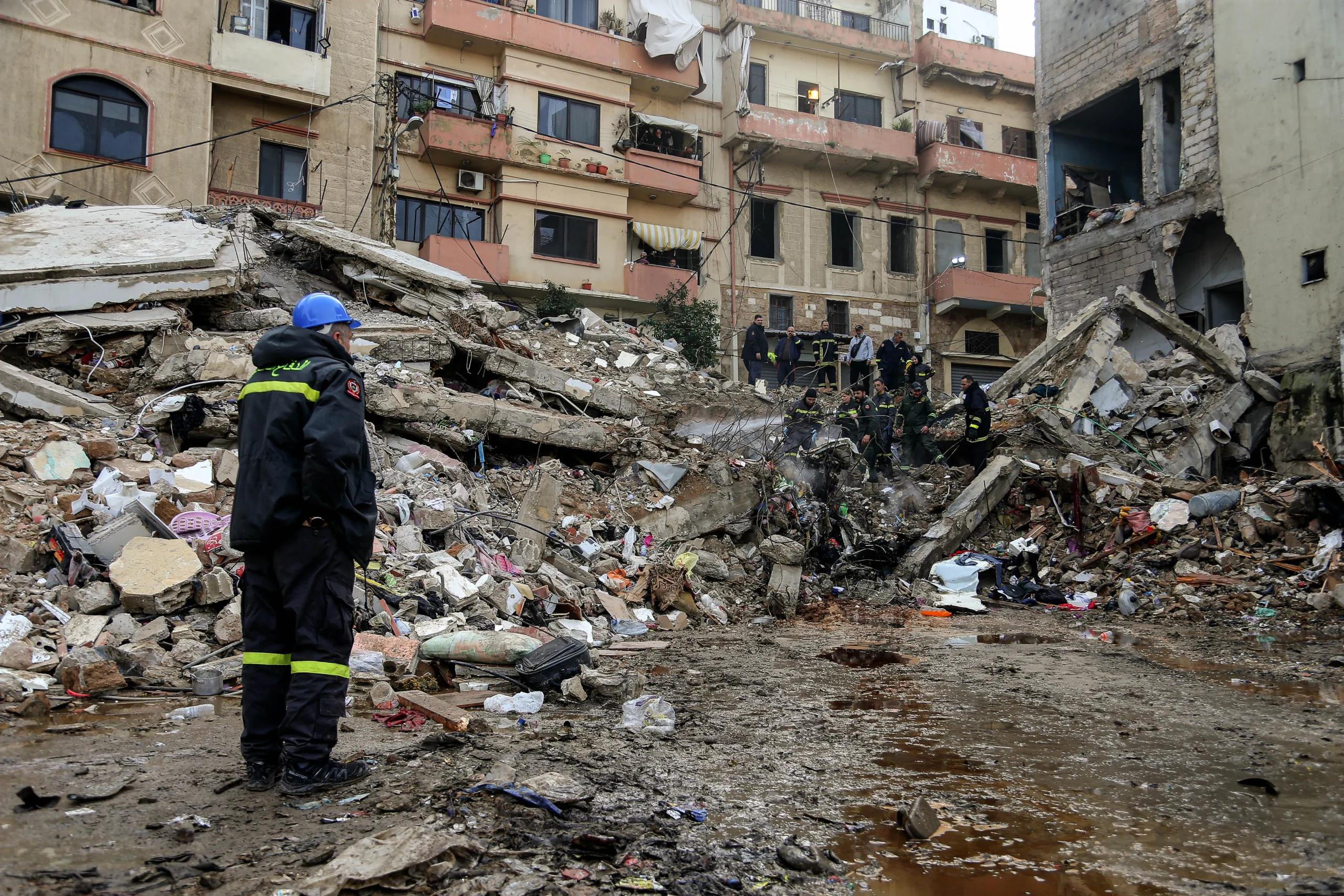
One of the examples presented by the report is the union’s fire brigade. According to a statement by its president, the union succeeded, through academic partnerships and local initiatives, in raising the number of operational vehicles from 4 to 13. A specialized engine was also secured from Italy through direct funding and flexible coordination with the Order of Engineers, away from the slow official channels.
This type of work does not solve the entire crisis, but it clarifies a central idea: when traditional channels are blocked, local administration searches for alternative ways to continue.
A New Law Opens Room for Movement
The report points to Law No. 21, issued on July 17, 2025, as an important milestone in adjusting the relationship between municipalities and central oversight. After long years of restrictions imposed by Legislative Decree No. 118/1977, the new law granted municipal councils and municipal unions broader financial capacity to act.
Head of the executive authority or president of the union: can contract expenditures of up to 100 million Lebanese pounds without prior external approval. This allows for urgent maintenance and the securing of essential operational materials.
The union council: can approve expenditures of up to one billion Lebanese pounds, which opens the door for more important projects, such as emergency infrastructure and sewage networks.
In a country suffering from inflation and the depreciation of the currency, these figures are no longer an administrative luxury, but a condition for the continuity of public services.
Positive Circumvention of Central Paralysis
When central administration turns into an obstacle to development, the search for alternative paths becomes a practical necessity. For this reason, the report presents what it calls “systematic positive circumvention,” meaning the channeling of funding and implementation through more flexible channels, such as international organizations, civil society, and the private sector.
The “Fayhaa Sorts” project: implemented in cooperation with Spanish organizations, where workers’ wages are paid and financial flows are managed directly from the donor to the field. The aim here is not to bypass the law, but to bypass the slowness that prevents implementation.
The “Baladi Amal” Association: the report points to its role in accompanying the union and developing executive performance.
The “Archi” model of solidarity financing: based on direct coordination with the diaspora and the private sector to fund infrastructure projects.
These models attempt to rebuild trust between citizens and the municipal institution after years of decline and unfulfilled promises.
Tripoli Emergency Fund: Different Governance in the Building Crisis
With the building-collapse crisis at the beginning of 2026, which threatened more than 105 buildings with immediate evacuation, the City Support Fund, or Tripoli Emergency Fund, emerged as a different response mechanism.
According to the report, this fund does not represent a temporary relief initiative only, but rather a model for testing stricter and more transparent governance tools. It relies on the “blind evaluation” mechanism, whereby engineering surveys of buildings are carried out without revealing the owners’ identities to the examining engineers, with the aim of reducing favoritism and ensuring neutrality.
Fund mandate: limited to only six months, after which it is to become a non-governmental organization.
Financial oversight: a ceiling was set for administrative expenses not exceeding 8%. As for financial oversight, it requires two separate signatures from two independent committees: the governance committee and the funding committee.
These mechanisms aim to build the trust of local and international donors and ensure that funds reach the right place.
The Waste Crisis: When the Plan Is Not Enough
In the solid waste file, the crisis appears in a different form. The operating contract signed with Lavajet dates back to 1998, meaning it is an old contract that can no longer keep up with population growth that has approached 60%.
But the problem does not stop at the contract or funding. According to the report, the union is facing what it calls “social thuggery,” meaning the obstruction of fieldwork by groups outside the law that use threats and assaults.
The report presents a clear example: the union was unable to deploy more than 25 waste containers out of 42 containers allocated to a targeted area because of threats and field assaults.
Here, the crisis becomes both environmental and security-related at the same time. When law-abiding citizens feel that the state does not protect order, they may begin to imitate the behavior of those who violate it. For this reason, the report considers that imposing legitimate security protection is a basic condition before implementing any environmental or administrative plan.
A Roadmap for Recovery
The report proposes three practical steps to move out of the state of paralysis.
First, establishing a specialized donor relations office within the union. This office would prepare projects according to clear standards and communicate directly with development funds, away from disabled central channels.
Second, activating comprehensive digital governance. This includes automating administrative transactions and publicly publishing budgets, tender decisions, and meeting minutes on digital platforms. Transparency here is not a slogan, but a means of restoring citizens’ trust.
Third, adopting a four-way partnership that brings together the public sector, the private sector, civil society, and local community groups. This formula can help operate public facilities and recover the cost of services, provided that it is accompanied by clear security protection for municipal assets, especially waste containers.
Can Fayhaa Become a Model?
The report does not present the Union of Fayhaa Municipalities as a complete or ideal model, but rather as an experience trying to operate within a disabled system. The value of this experience lies in the fact that it does not wait only for central solutions, but searches for local, flexible, and implementable tools.
The basic question is no longer: can Tripoli rise again? Rather, it has become: can the Fayhaa model, through independent funds, practical decentralization, and direct partnerships, serve as an entry point for rethinking the administration of the state itself?
Between bureaucracy and the city, Fayhaa is trying to seize a margin for action. This margin may not yet be enough, but it opens a necessary door to escape the deadly routine.
Latest News


- June 1, 2026

- February 14, 2026

- December 22, 2025