

Concrete Cancer in Tripoli: Why Are Buildings Collapsing, and How Do We Save Lives?
The Engineering of Collapse in Tripoli: A Building Crisis or a State Crisis?
Prepared by Lawyer Khaled Walid Al Sabbagh
Specialist in Strategic Studies and Public Policy
June 7, 2026
The repeated collapse of residential buildings in Tripoli is no longer a set of isolated incidents or sudden disasters that can be treated as passing news. What is happening in the city is the result of a long accumulation of a housing, financial, administrative, and engineering crisis that has been left for years without serious treatment.
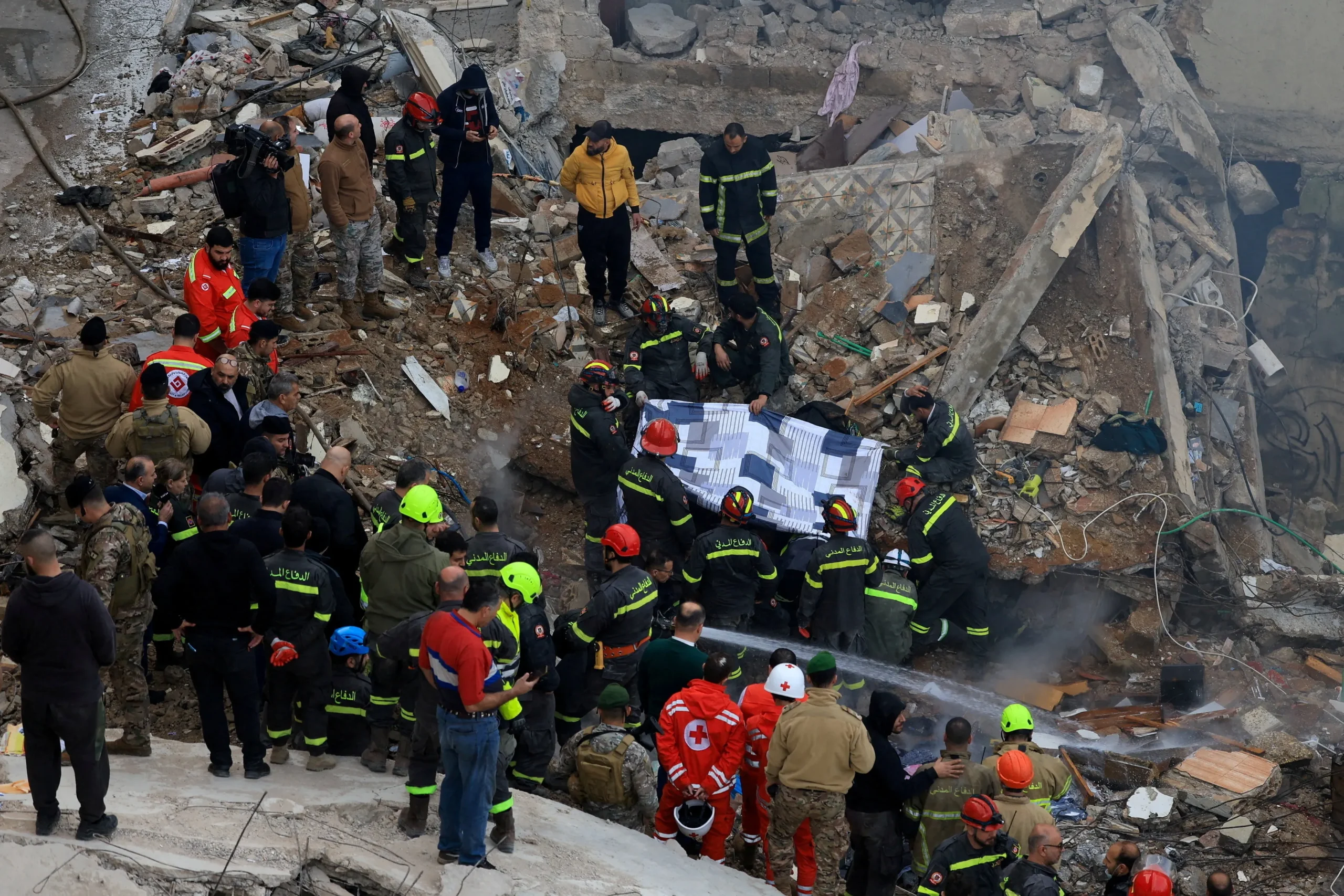
The recent tragedy in the Bab al-Tabbaneh area in February 2026 brought the file back to the forefront with force. According to the paper, the collapse resulted in nearly 14 direct victims, within a broader structural crisis that claimed 16 citizens in simultaneous collapses witnessed by the city at the beginning of the year. But the numbers here do not only reveal the scale of the tragedy. They also reveal the scale of official incapacity in the face of a known and declared danger.
The Three Sides of the Crisis: Law, Poverty, and Cost
The collapse of any building in Tripoli cannot be understood from an engineering angle alone. The roof that collapses over its residents is, in reality, the result of three interconnected factors.
The first factor is the old rent law. This law created long-term stagnation between landlords and tenants. The landlord lacks the incentive or sufficient financial capacity to renovate, while the tenant fears eviction or having to bear a cost they cannot afford. Between the two, many buildings remained without real maintenance and gradually turned into dangerous housing.
The second factor is the decline in living capacity. Even after the minimum wage was raised to 28 million Lebanese pounds in 2025, these figures remained unable to keep up with inflation and the rising cost of living. As a result, many families cannot move to alternative housing, and at the same time cannot reinforce their homes.
The third factor is the rising cost of construction and renovation after the currency collapse. Building materials and engineers’ fees became tied to the dollar, while illegal practices expanded, such as adding unlawful floors during electoral seasons or through political clientelism. These additions placed already deteriorating buildings under greater structural pressure.
A Municipality Without Tools
In an interview on the “Haki Taghyir” podcast, Engineer Mostafa Fakhri El Dine, head of the engineering committee at the Municipality of Tripoli, explained a central part of the problem: the municipality does not have the freedom of movement or the sufficient funding needed for rapid intervention.
Any project requires approvals that pass through ministries and central administration. This slow cycle means that the danger may be known, but the response remains delayed. Worse still, the financial transfers on which municipalities depend often arrive years late, after losing most of their purchasing value.
In this sense, Tripoli is not only facing cracked buildings. It is also facing an administrative system that obstructs its ability to protect its residents. Financial decentralization is absent, and the city’s own resources do not translate into an actual capacity to intervene.
Many Numbers, Little Intervention
The paper reveals a clear gap between the scale of the danger and the scale of intervention. The problem is not the absence of assessments or reports, but the absence of executive capacity. The head of the engineering committee expressed this through a shocking phrase:
“I have zero dollars for reinforcement.”
This phrase summarizes the state of paralysis. There are buildings that need reinforcement, and others that require evacuation or demolition, but the oversight and financial capacity do not match the scale of the crisis. Monitoring is carried out with limited means, an insufficient number of personnel, and funding that does not allow the shift from diagnosis to treatment.
Tripoli Support Fund: An Attempt Outside Bureaucracy
In the face of this incapacity, the Tripoli Support Fund emerged as an alternative form of intervention. According to the website created by the municipality for this purpose, the fund had managed, by June 2026, to evacuate 39 buildings, a number that exceeds the level of direct government intervention.
Yet despite its importance, this model cannot carry the crisis alone. The fund collected only $291,797 out of a target of $3,000,000, equivalent to 9.7% of the required amount. This funding gap shows that local initiatives are capable of opening an alternative path, but they need broader support in order to become a sustainable solution.
According to the paper, the fund is distinguished by a clear governance structure. It is directly supervised by Engineer Chawki Fatfat, the fund’s president, and Dr. Hassan Dennaoui, governance advisor. It is managed by a governance committee chaired by Khaled Kabbara and a funding committee chaired by Engineer Bilal Hussein.
The fund also adopts an administrative expense ceiling that does not exceed 8%, along with an eight-step authorization process requiring two signatures, comparative price offers, and proof of field delivery, to ensure that donations reach their proper destination.
From Random Evacuation to Rights-Based Protection
Evacuating residents from a dangerous building is not enough if the evacuation leads them into homelessness. For this reason, the paper proposes moving from the logic of random emergency response to the logic of rights-based protection.
First, there is a need for a geographic digital platform, or GIS, that publishes a unified and public registry of threatened buildings. Publishing this information limits arbitrariness and makes the danger clear to residents and concerned authorities.
Second, the paper proposes the idea of a conditional compensatory evacuation protocol. This approach is based on setting an amount of $360 per month as an emergency temporary housing allowance, not as a direct obligation on exhausted civic initiatives, but as a protocol target that rights-based and municipal frameworks can push to transform into a commitment funded by international credit lines, donor agencies, and the independent municipal fund.
Third, the paper stresses mandatory engineering supervision. What is needed is to stop the “cosmetic coverage” that hides the real danger inside buildings, and to require landlords to work under the supervision of a licensed engineer from the syndicate before any intervention or renovation.
A Crisis That Cannot Be Solved by One Initiative
The experience of the Tripoli Support Fund shows that the city is capable of producing governance models that are more transparent and effective than slow official channels. But it also shows that the scale of the crisis is larger than the capacity of any single initiative.
Tripoli does not only need new promises. It needs an integrated path that brings together the state, the municipality, donor agencies, and the local community. Threatened buildings are not merely an urban problem. They are a direct test of the right to safe housing, the right to life, and the right to a city that does not leave its residents under roofs that may collapse.
In the end, cracked concrete cannot be separated from cracked policies. Unless numbers and reports are transformed into decisions, funding, and accountability, the city will remain trapped between a known danger and a delayed response.
Sources of the Original Paper
The paper was based on data from the Tripoli Support Fund, the “Haki Taghyir” podcast interview with Engineer Mostafa Fakhri El Dine, Amnesty International reports, Lebanese Council of Ministers decisions, governance documents of the Tripoli Support Fund, as well as published official statements and press interviews.
Latest News

- June 15, 2026

- June 1, 2026

- February 14, 2026

- December 22, 2025